

Your air conditioner has been running hard all season, and chances are you haven’t thought much about what’s going on inside it. But here’s the thing: dirty AC coils are one of the most common reasons systems underperform, run up energy bills, and break down ahead of schedule. Cleaning AC coils isn’t as simple as grabbing a spray can, and doing it wrong can actually make things worse.
What Do AC Coils Do and Why Do They Get Dirty?
Your AC system has two sets of coils working together. The evaporator coil sits inside your air handler and absorbs heat from the indoor air. The condenser coil lives in the outdoor unit and releases that heat outside. Together, they make cooling possible.
Over time, both coils collect dust, pollen, pet dander, and grime. Because this buildup happens slowly, most people don’t notice until their system is already struggling. The result is a unit that runs longer, cools less effectively, and costs more to operate every month.
Think of it like trying to breathe through a cloth. It still works, but it takes a lot more effort.
Is It Safe to Use a Store-Bought AC Coil Cleaner Yourself?
It’s a reasonable question. There are plenty of AC coil cleaner products on store shelves, and some of them are fine for light surface dust. But cleaning AC coils beyond that surface level is where things get complicated.
Using the wrong air conditioner coil cleaner can corrode aluminum or copper fins over time. Applying too much pressure with a brush or hose nozzle can bend those fins, which restricts airflow and reduces efficiency. Rinsing incorrectly can saturate the drain pan, leading to water leaks or mold growth inside the air handler. And working near electrical components without proper training is a real safety hazard.
A professional doesn’t just apply an AC coil cleaner and rinse. They inspect both coils, check the drain line, look for refrigerant issues, and clean thoroughly in ways that a store-bought kit simply can’t match. That difference matters, especially for a system you depend on all summer.
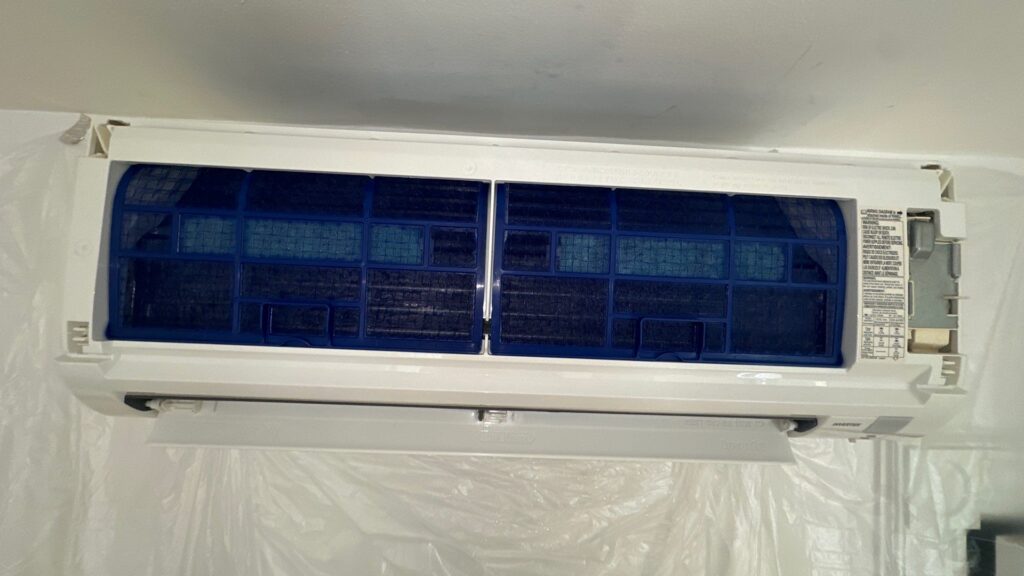
Summer has a way of showing up before you’re ready. One day it’s barely warm, and the next you’re reaching for the remote to cool things down, only to find your mini split system is struggling. That’s not a great time to find out it needed attention months ago. Routine mini split system maintenance is easy to put off, but the consequences tend to show up right when you need your system most.
What Makes Mini Split Systems Different From Traditional AC?
A ductless mini split system works differently than a central air setup. Instead of pushing air through ducts, it uses one or more indoor air handlers mounted directly in the rooms you want to heat or cool. Each unit connects to an outdoor compressor, giving you zone-by-zone control without any ductwork.
That flexibility is a big reason so many homeowners have made the switch. But here’s something that often gets overlooked: without ducts to filter the air first, everything in your indoor environment, including dust, pet dander, pollen, and cooking particles, gets pulled directly into those air handlers.
Over time, that buildup coats the internal components. Filters clog. Coils get grimy. Drain lines back up. The result is a system that costs more to run and doesn’t cool as well as it once did.
What Does Mini Split System Maintenance Cover?
A lot of people assume mini split system maintenance just means rinsing off the outdoor unit. In reality, a thorough service covers several components, both inside and out.
Here’s what a professional cleaning and inspection typically addresses:
- Indoor air filters: These catch the bulk of airborne particles. When they’re clogged, airflow drops and the unit has to work overtime.
- Evaporator coils: Located inside the air handler, these absorb heat from the room. Dust and grime reduce their ability to do that job efficiently.
- Drain pan and drain line: Moisture from normal operation flows out through the drain. When this line gets blocked, water can back up and cause damage or encourage mold growth.
- Blower fan and housing: Dust buildup on the fan blades reduces airflow and puts extra strain on the motor over time.
- Outdoor condenser unit: Leaves, dirt, and debris can accumulate around the compressor and restrict airflow at the source.
Each of these components plays a role in how well your system performs. Skipping any of them leaves the door open for reduced efficiency or early equipment failure.
How Often Should You Schedule Mini Split System Maintenance?
For most households, once a year is a solid baseline. Spring is usually the best time, before temperatures climb and you start depending on the system daily. That window gives a technician time to catch anything that needs attention before it becomes urgent.
Some situations call for more frequent service. Homes with pets, spaces with allergy or asthma concerns, systems that run year-round, and commercial properties with heavy foot traffic may all benefit from more regular attention.
Neglected mini split systems don’t usually fail all at once; they gradually get worse. Higher energy bills, longer run times, uneven cooling, and odd smells are all signs that maintenance has been put off too long. By the time those symptoms appear, the system is already under real stress. Staying ahead of it is always cheaper than catching up to it.
What Are the Signs Your Mini Split Is Due for Service?
Sometimes the system will let you know something’s off before you even think to check. Watch for these warning signs:
- Weak or uneven airflow from one or more indoor units
- A musty or stale smell when the system kicks on, which often points to mold or mildew buildup
- Higher energy bills without any change in how you’re using the system
- Visible dust or debris collecting around the vents or unit housing
- The unit is running longer than usual to reach the temperature you’ve set
- Moisture or water stains near the indoor unit, which can signal a drain issue
Any one of these is worth taking seriously, and a few together mean it’s time to schedule professional service. Ignoring the signs typically leads to more extensive repairs down the road.
Homeowners can help between professional visits by rinsing the indoor filters every few weeks during heavy-use months. Most filters sit behind the front panel and can be cleaned gently under lukewarm water; just make sure they are fully dry before reinstalling.
Deeper work, like cleaning the coils or clearing a blocked drain line, should be left to a professional. Using the wrong cleaner on the coils can cause corrosion, and forcing a drain line without knowing where it runs can create bigger problems. For homes where indoor air quality is a broader concern, staying current on residential air duct cleaning alongside mini split system maintenance gives you a more complete picture of what is moving through your home.
Don’t Wait for the Heat to Find Out Your System Isn’t Ready
At All Seasons Air Duct Cleaning, we’ve been serving Northern New Jersey for over 20 years. Our NADCA-certified technicians provide comprehensive mini split system cleaning and maintenance that covers every component, not just the surface-level cleaning. We show you before-and-after results so you know exactly what was done, and we never push services you don’t need. Whether you have a single-room unit or a multi-zone setup, we bring the same level of care to every job.
If your system hasn’t been serviced in a while, now is the time to get ahead of it. Contact us today for a free estimate and let us make sure your unit is ready before summer arrives!
Mini Split System Maintenance FAQs
A ductless mini split system uses indoor air handlers and an outdoor compressor to heat and cool your space without traditional ductwork. Each indoor unit serves a specific zone, giving you independent control over different areas of your home.
At a minimum, once a year before the cooling season begins. Homes with pets, heavy use, or air quality concerns may benefit from more frequent professional service.
A musty odor usually points to mold or mildew buildup inside the air handler, commonly on the coils, drain pan, or blower fan. It's one of the most common signs that mini split system maintenance is overdue.
It does. A clean system moves air more efficiently and doesn't have to run as long to reach your set temperature. Dirty components are one of the main drivers of higher-than-expected energy costs.
Maintenance is preventive; it keeps components clean and functioning before problems develop. A repair addresses something that has already failed or is actively causing issues. Regular maintenance reduces the likelihood that you'll need a repair in the first place.
